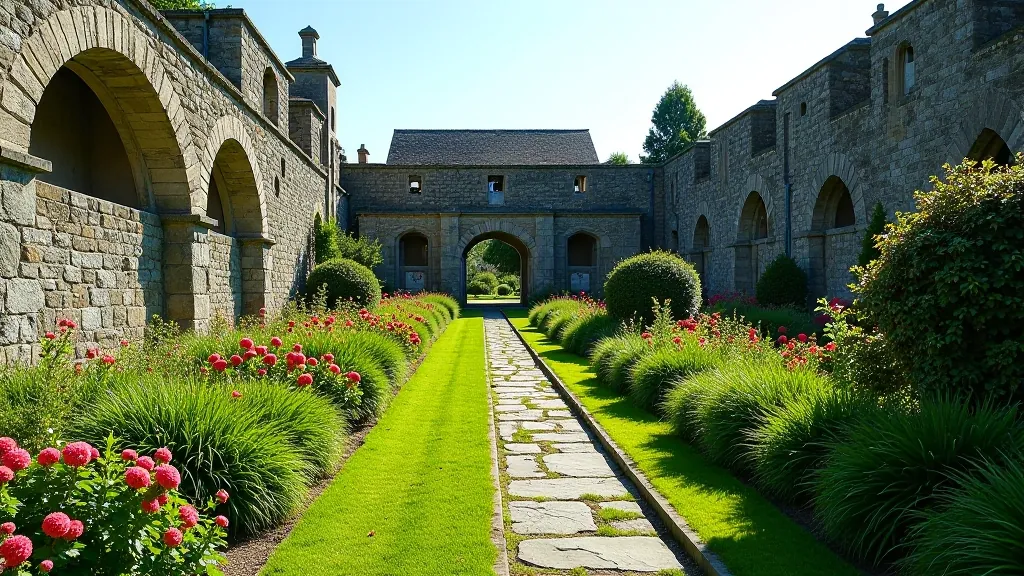
quantolink Logo quantolink Contact Us
Contact Us
6 min read All Levels June 2026

History of Jerpoint Abbey and What You'll See

Step inside a 13th-century Cistercian monastery frozen in time. We'll walk you through what remains, what it all means, and why this place still matters after 800 years.

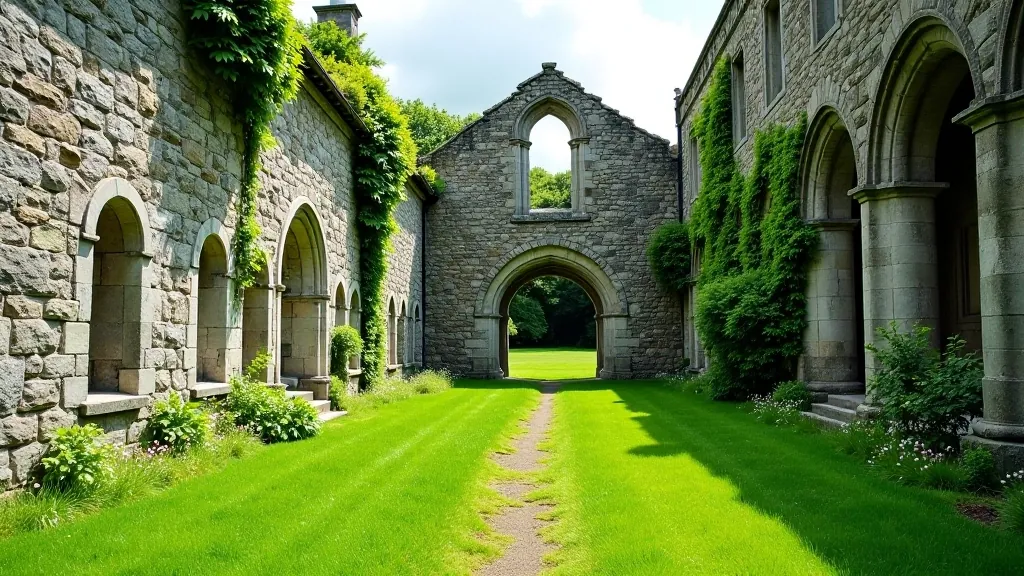
Historic stone abbey ruins with weathered walls and arched doorways surrounded by green ivy and grass

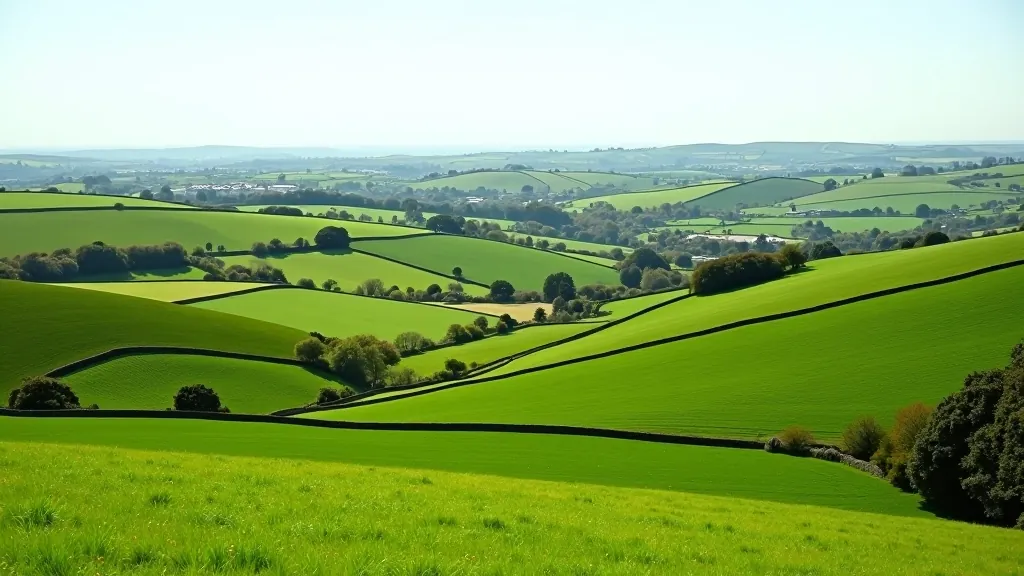
Jerpoint Abbey sits quietly in County Kilkenny's farmland like a patient teacher. It doesn't shout about its past — you've got to look closely to understand what you're seeing. Built around 1180, this Cistercian monastery survived 600 years of monastic life before dissolution in the 1540s. What remains isn't ruins in the romantic sense. It's architecture that still tells a story if you know where to look.

The monks who lived here weren't idle. They farmed. They prayed. They built with stone and kept detailed records. Walking through what's left — the cloister, the church, the carved tombs — you're literally walking through their daily world. That's what makes Jerpoint different from purely historical sites. You're not just reading about the past. You're standing in spaces where real people lived and worked.

The Church and What Survives

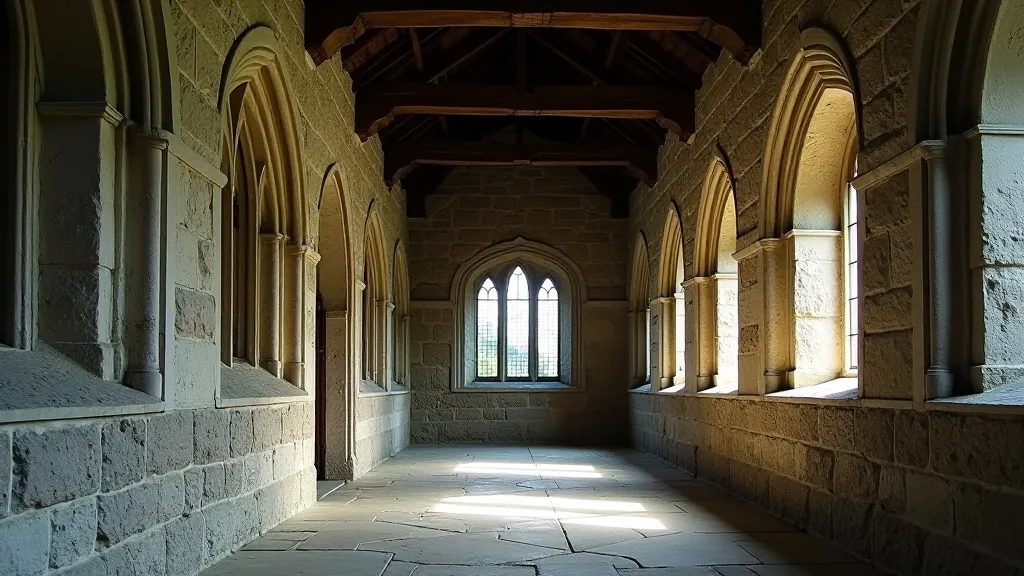
The abbey church is the centerpiece. When you walk in, the first thing that strikes you is the height. These weren't small spaces. The nave — that's the main body where worshippers stood — stretches long and narrow, designed for quiet contemplation and prayer. The walls remain mostly intact on the north and south sides, though the roof's long gone. You can still see the window openings where light used to pour through, creating patterns on stone floors.

Look up at the walls and you'll notice something: decorative carved stones, worn smooth by centuries. Some show faces. Others show intricate knotwork. The monks didn't just build functional spaces. They invested in beauty, even in a monastery dedicated to simplicity. That contradiction — austere living with artistic detail — tells you something real about medieval monastic life.

The chancel, where the altar once stood, sits at the east end. You can still make out where the high altar would've been. Behind it, you'll find what's perhaps the most remarkable feature: a series of carved stone tombs. Knights and abbots were buried here. The carvings on their tomb lids show weapons, religious symbols, and intricate designs. These aren't just graves. They're art, status markers, and spiritual statements all at once.

Interior of stone abbey church with tall walls, arched windows, and carved stone details
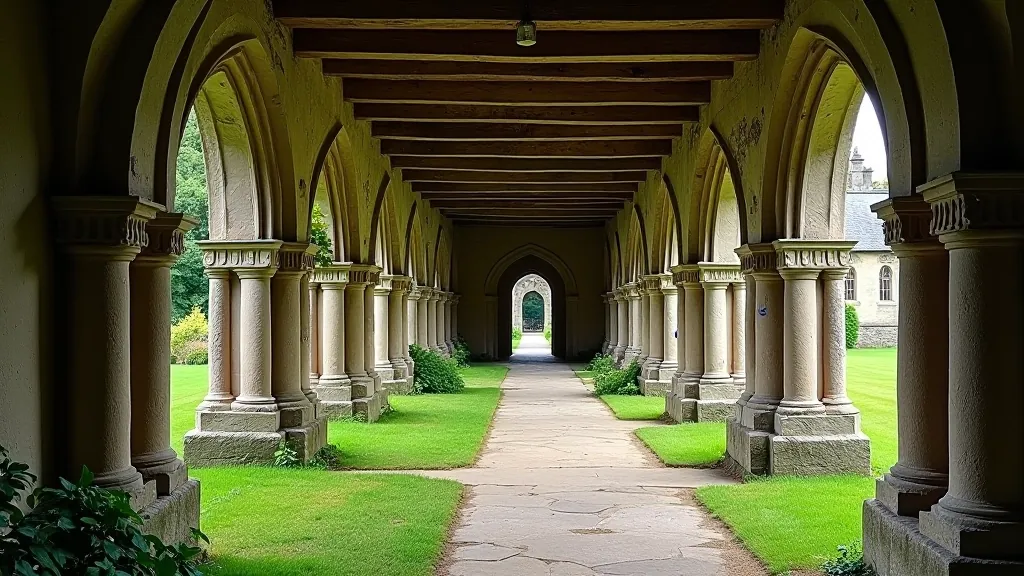
Stone cloister walkway with arched columns and weathered archways forming a covered passageway

The Cloister: The Monks' Daily Path

If the church was where monks prayed together, the cloister was where they lived their individual spiritual lives. It's a covered walkway forming a square around an open courtyard. Monks walked here between prayer services, between meals, between work. They studied, copied manuscripts, and reflected in silence. The cloister you see today — or what remains of it — still has much of its arcade structure standing. The columns are worn, some decorative carvings are faded, but you can walk the same path monks walked 800 years ago.

Notice the carved stone capitals atop the columns. They're decorated with leaves, faces, and abstract patterns. The monks had time and skill. They used both. The east range of the cloister — the buildings that adjoined it on that side — would've contained the dormitory where monks slept and the warming room, the only heated space in the monastery during winter. The south range held the refectory, the dining hall. Life at Jerpoint followed a strict schedule, and this cloister was its geographic center.

Details That Matter: What to Look For

Tomb Carvings

The carved lids in the chancel show medieval craftsmanship at its finest. Look for effigies of knights with their weapons, clerics with their religious symbols. The detail is remarkable — you can sometimes make out individual armor pieces and clothing styles. These tell you not just who was buried here, but what they wanted remembered.

Window Openings

Medieval architecture controlled light deliberately. Wide windows in the east and west let in morning and evening light. Smaller openings in the north wall let in diffuse light without heat. If you're there at the right time of day, you'll see how this plays across the stone. The builders understood light as a tool, almost a material.

Stone Wear Patterns

Look at the cloister floor and doorways. You'll see worn grooves where stone has been polished smooth by centuries of footsteps. This wear pattern tells you the most-traveled routes through the monastery. Monks walked these paths thousands of times. The stone remembers.

Decorative Carvings

Column capitals, corbels, and wall stones feature carved faces and foliage. Some are abstract. Others are surprisingly detailed. These weren't required by function — they're purely decorative. They prove that even in a monastery dedicated to spiritual simplicity, beauty mattered.

Planning Your Time Here

You'll need at least 90 minutes to really see Jerpoint Abbey. That's not rushing. That's spending time actually looking at details, reading the carved stones, understanding the layout. Many visitors spend two hours and feel they've only scratched the surface. There's a visitor center with background information and artifacts, which adds another 30-45 minutes if you're interested.

The site is outdoors and exposed. Wear layers. Irish weather changes quickly — you might get sun, cloud, and rain in the same visit. Sturdy footwear matters because the ground is uneven and can be wet. The pathways are accessible for most fitness levels, though some areas have steps and uneven stone.

If you're visiting with family or friends, this is the kind of place where people naturally spread out. Some folks want to sit quietly in the church. Others want to photograph the carvings. Someone might want to explore the cloister systematically. That flexibility is part of what makes Jerpoint special — it doesn't demand a particular way of experiencing it.

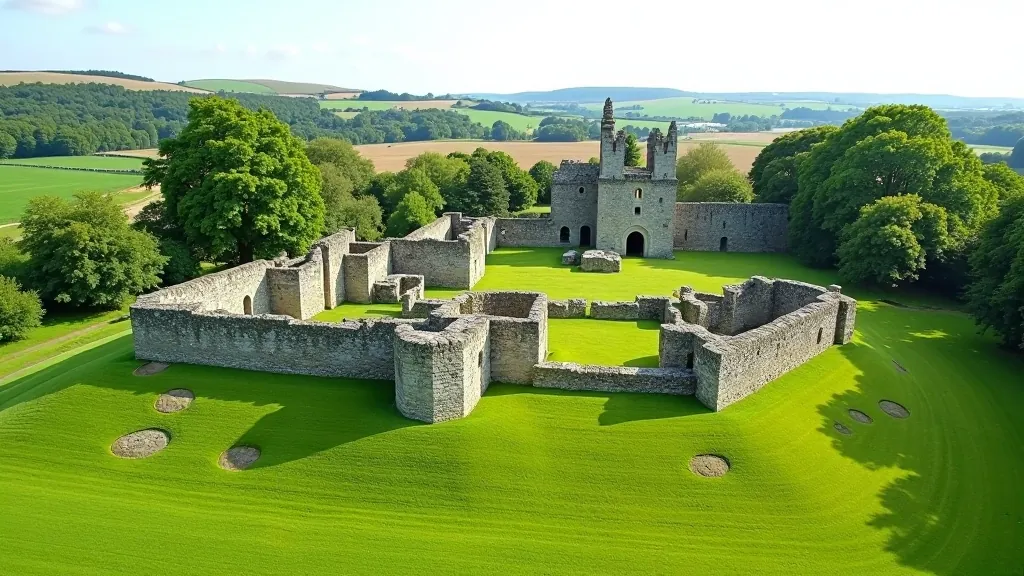
Expansive view of abbey ruins across grassy grounds with stone foundations and standing walls visible

Why Jerpoint Abbey Matters Today

Eight hundred years is a long time. Civilizations rise and fall. Technologies transform. But Jerpoint Abbey remains, telling the same story it's been telling since the monks left: that humans need spaces for contemplation, that beauty matters even in austere settings, that community and routine shape our lives.

Standing in the cloister, you're standing in a space designed for quiet reflection. That design — that intention — still works today.

The monastery was dissolved in 1540, as were hundreds of others during Henry VIII's Dissolution. But unlike some sites, Jerpoint wasn't completely stripped or built over. Locals protected it. Farmers farmed around it. Over centuries, it became integrated into the landscape — not as a dead historical object, but as a living part of Kilkenny's physical and cultural world.

That's what makes visiting important. You're not just checking off a historical site. You're participating in a tradition of preservation that's lasted 480 years. You're looking at the same stones, the same carvings, the same architectural decisions that people have been looking at for centuries. That continuity — that unbroken line of human attention — is part of what makes the place meaningful.

Síle O'Connor

Author

Síle O'Connor

Senior Heritage & Trails Correspondent

Heritage tourism specialist and medieval archaeology researcher with 14 years' experience documenting Ireland's monastic sites and accessible trail development.

About This Guide

This article provides historical and architectural information about Jerpoint Abbey based on documented sources and site observations. Conditions at the abbey may change seasonally. We recommend checking opening hours and access information before your visit. Some areas may be temporarily closed for conservation work. For official site information and current updates, contact the local visitor center or Kilkenny Tourism.